Bay Area residents approve $1 billion tax for public transit
Regional News

Audio By Carbonatix
7:30 PM on Thursday, November 12
(The Center Square) - San Francisco Bay Area residents approved multiple new taxes to fund public transit in this year’s election, including a $1 billion annual sales tax.
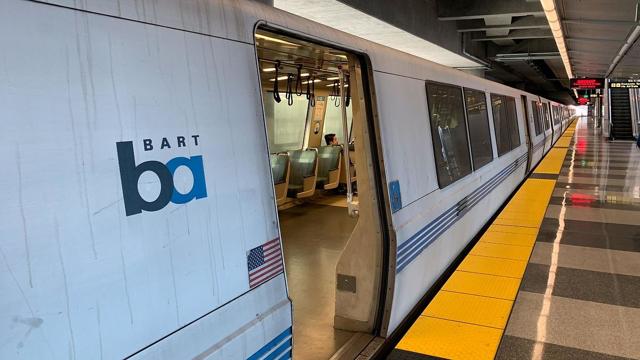
Supporters of the tax say the increased income could be a lifeline for the struggling Bay Area Rapid Transit, Caltrain and other regional public transit systems that had warned of major service cuts if the measure were not passed. But amid economic stress in the region, opponents questioned the transit system’s spending practices.
“Transit is worth the investment,” read a BART statement after the regional ballot Measure RTM passed. "RTM" stands for "Regional Transit Measure."
A spokesperson for the transit system declined an interview request from The Center Square for this story.
Measure RTM asked voters in five Bay Area counties - Alameda, Contra Costa, Santa Clara, San Mateo and San Francisco - to increase sales taxes over the next 14 years to support BART, Oakland’s AC Transit, Muni, Caltrain and several other regional public transit systems as they struggle from the post-pandemic ridership drop. The tax is 0.5% in all the counties, except for San Francisco, which will see a 1% tax.
The tax will cost residents outside of San Francisco $8 per month, according to 350 Bay Area, a climate justice organization in support of the measure.
On Nov. 3, Bay Area residents widely agreed to the tax. Across the five counties, Measure RTM received an average of 64% of votes, according to county officials as of Thursday. Santa Clara County showed the least support for the measure at 55.3% of voters in favor, while San Francisco, with 79.2% of voters, overwhelmingly backed the move.
The new sales tax is expected to generate nearly $1 billion annually for the next 14 years.
“People want better transit, and it's important to have a functioning transit system in the Bay area,” said Steven Greenhut, a senior fellow at Pacific Research Institute’s Free Cities Center.
“But my problem is that, with public transit agencies in general, it’s just the way they spend their money." Greenhut told The Center Square.
One BART expense that has drawn repeated criticism is the ongoing $12.2 billion San Jose expansion, which has seen a drawn-out timeline and greatly expanded budget. Speaking to The Center Square before the Measure RTM vote, the Contra Costa County Taxpayers Association argued in opposition to the new tax, saying the agency should pause or cancel overpriced non-essential expenses such as the San Jose expansion before looking to increase tax revenue.
“They're government bureaucracies, and when the money runs out, they threaten service cuts,” added Greenhut.
Ahead of the Measure RTM vote, BART faced a $375 million budget deficit for 2027. Without the additional funds from Measure RTM, BART had said that starting in January 2027, operations would be cut by 63% in train hours. Parking and rider fees would rise by 30%, and roughly 600 employees would be laid off with benefits deferred, among other changes, BART warned.
The agency said the deficit was not due to poor spending, but instead a severe decline in ridership since the COVID-19 pandemic.
“Remote work has changed how Bay Area residents live, work and travel,” read a BART financial deficit report from earlier this year. “It has hit BART and all other public transit systems hard, decimating transit ridership and, along with it, the transit fare revenue we rely on to keep trains running.”
BART reacted to revenue problems during recent years with cost reductions and saved $526 million in operational costs between 2020 and 2025, said agency spokesperson Christopher Filippi.
“We're really holding the line when it comes to cutting costs,” Filippi told The Center Square before the election. “We've eliminated more than 670 vacant positions. We have a strategic hiring freeze. We have had a freeze on management salaries. We're even running shorter trains to save energy costs.”
Despite year-over-year ridership increases since the pandemic, BART ridership remains at about half the system’s pre-pandemic average in 2026, according to the agency’s data. BART was roughly 71% paid for by ridership fees pre-pandemic, which has fallen to just 32% this year.
“There's a significant difference there and the concern for BART is that, more than almost any other transit agency, our operating budget was paid for by fares,” said Filippi.
A June report from the San Francisco Chronicle found that the San Jose-San Francisco-Oakland metro area is among the highest in the country for work-from-home rates.
“So that's what leads us to an operating deficit,” Filippi said.
Locally, 74.4% of San Francisco voters approved an additional parcel tax on property owners over the next 15 years to increase funding for the city’s MUNI public transit system, which includes the city’s well-known streetcars. The tax is expected to generate $177 million for the system.
As Bay Area residents deal with more taxes, Greenhut said transportation systems such as BART should work on becoming more efficient.
“BART's a useful system. There's no question about it,” said Greenhut. “But how about some political pressure on these systems to be more efficient, to better serve customers?”