California spent millions on a police transparency website, but its most recent data is nearly 2 years old
Regional News

Audio By Carbonatix
7:00 AM on Wednesday, May 13
Adam Herbets
(The Center Square) - Three years ago, University of California - Berkeley was proud to announce it received $6.87 million from California Gov. Gavin Newsom’s budget to develop a first-of-its-kind, state-wide database uncovering police misconduct and use-of-force records.
The website was launched on Aug. 5, 2025 with roughly 1.5 million pages of internal law enforcement records from 1965 to 2024. It has been a valuable resource for journalists, attorneys, citizens, and fellow law enforcement to learn about the history of officers in their communities.
In 2023, UC Berkeley referred to the website as a way to bridge an "information gap getting in the way of protecting people." But years later, the information gap still exists. The database’s most recent case is from September 2024. The latest published case of “misconduct” is from January 2024. In total, there have only been three cases published from the past two years and zero cases from 2025 or 2026.
Journalists running the program say they are working hard to try and get the website up to date.
Lisa Pickoff-White, director of research for the Police Records Access Project out of UC Berkeley, was unable to say whether the database will be updated with 2025 cases by the end of 2026.
She said it’s difficult to gather records for a transparency portal when some police departments continue to be not transparent. Her team makes requests to more than 700 agencies each year. If certain records are not released, her team works with attorneys to negotiate or file a lawsuit.
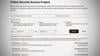
California Police Records Access Project search page
The California Police Records Access Project search page shows just one case of misconduct published since 2024. Photo: Courtesy of Lisa Pickoff-White / Used with Permission
“We essentially have only recently just started to request (records) for 2025,” said Pickoff-White. “Our problem is that we already don’t have the resources, frankly, to fight every agency to release these records.”
Pickoff-White said the website has been updated “at least once” since it was launched in August 2025.
“We do not have a set update schedule,” she said. “We will be updating it again. It’s not like weekly or monthly or anything.”
Lack of Cooperation
The website is intended to be as simple as typing in a keyword or an officer’s name. How many times has this officer fired his or her weapon? Has this officer ever been caught violating a citizen’s rights? What discipline, if any, did they receive?
In some cases, police departments are withholding records or redacting officer’s names but releasing the phone numbers and home addresses of sexual assault victims, according to Pickoff-White. It takes time for her team to process records and redact victim information that might have been accidentally released. They use artificial intelligence to help with that process.
“Each of these cases is a world unto itself. Each of these cases are about serious injury, or death, or misconduct,” she said. “Sometimes we get physical records. We get thumb drives. We get hard drives. I’ve gotten a CD. I’ve gotten a CD with a staple through the cover of it which broke the CD. We’ve gotten paper. There’s a reporter whose garage is full of boxes.”
But the biggest bottleneck, she said, has been the police's lack of willingness to cooperate.
Susan Seager, an attorney and director of the Press Freedom Project at UC Irvine, said she has received $150,000 from UC Berkeley to aid in the legal fight for records.
“It’s not the fault of Berkeley. It’s the fault of the governor, and the state, and the power of the police agencies,” Seager said. “What is the bottleneck? I don’t know. A combination of ignorance, obstructionism, lack of will, lack of (people), arrogance. I think there’s a whole lot of things going on.”

Surveillance video from LAPD officer-involved shooting
A surveillance video released by the Los Angeles Police Department of an officer-involved shooting, Feb. 20, 2024. More than two years later, the case has not been uploaded to a state-funded website designed to track police transparency. Photo: Screenshot / Los Angeles Police Department via YouTube
Chris Burbank, a former police chief who now consults for law enforcement agencies across the country, said he was disappointed in Newsom’s strategy to achieve police transparency.
“Why have Berkeley be the middle person?” Burbank asked. “I’m a little dumbfounded. I can’t figure out why they’d want to do it this way… There just seems to be a better way to do it.”
Burbank said a simpler solution would be for California to require police departments to publish the data themselves. In many cases, departments are already required to forward records to the California Commission on Peace Officer Standards and Training (POST).
“I love it. I think that’s a great idea. I think it should be searchable by officer name,” Seager said. “In a perfect world, absolutely yes. They should mandate that all of these police departments have this.”
'Out of a job'
Pickoff-White also agreed, although she cautioned there would still need to be checks and balances to ensure police departments aren’t picking and choosing cases to obscure from the public.
“I mean, I think it would be great. I would love to be put out of a job!” Pickoff-White joked. “The government could do it more easily and cheaply themselves… (However), if agencies were themselves publishing the records, I might be concerned about whether they’re publishing all of them.”
Newsom's staff declined to comment on the program and was not responsive when asked to delve into the specifics on how the money has been spent.
After several days of emails, his office chose not to answer questions from The Center Square. Instead, a spokesperson for the governor’s office issued a statement that was one sentence.
“The Governor believes accountability and transparency are foundational to public safety and community trust,” wrote Diana Croft-Pelayo, the governor’s chief deputy director of communications.
According to Burbank, the state has an obligation to address where police transparency has fallen short.
“I don’t know why you wouldn’t just mandate this every month,” Burbank said. “It really seems like either an oversight, a misstep, or they just are kind of blind to what’s going on.”
Neither Newsom nor UC Berkeley have commented on whether the $6.87 million in funding has been renewed. The school’s press release from June 2023 indicated the funds would be “available for three years.”
According to Seager, she believes the state funds are set to run out next month.
Pickoff-White said she was not authorized to discuss the specifics of the state funding, but she said the program could use more of it.
“Whether we receive more funding is up to the Legislature and other funders,” she said. “Further funding would allow us to release more records, and to continue to gather the records, and to continue to make improvements and release more information… We are aware that there are many things that could be better about this. It is very bare bones at the moment, because we didn’t want the perfect to be the enemy of the good. We know, and knew, that we have really important information, so we are working hard to release that as quickly, but also as ethically, as possible.”