Judge denies restraining order for conservative media figures who sought press passes
News > Politics & Government News


Audio By Carbonatix
2:12 PM on Tuesday, March 10
By MARTHA BELLISLE
SEATTLE (AP) — Washington state lawmakers were within their rights when they declined to issue press passes to three conservative media figures, a federal judge ruled Tuesday in a case that echoes a national discussion over who qualifies as a journalist.
The Democratic-controlled Washington House of Representatives early this year declined to issue press credentials that would have granted the three access to parts of the Capitol in Olympia that are off-limits to the general public. The body said they were not bona fide journalists because they are participants in the political arena — advocating for certain agendas and hosting or speaking at rallies.
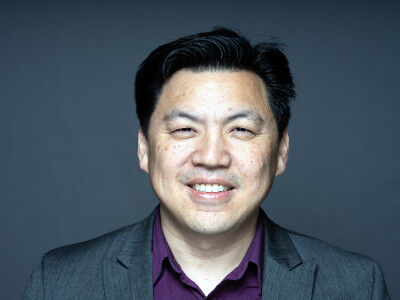
The three filed a federal lawsuit and asked the court for an emergency temporary restraining order that would force the House to give them passes in the closing days of the session. The group includes Ari Hoffman, host of “Seattle’s Conservative Talk” show on AM 570 KVI; Brandi Kruse, host of the podcast “unDivided;” and Jonathan Choe, a senior fellow at the Discovery Institute, a conservative think tank.
Their lawyer, Jackson Maynard, told U.S. District Judge David Estudillo on Monday that the process used to deny them press credentials was vague and arbitrarily applied, violating their due-process rights, and withholding access because of they disagree with the lawmakers’ political views violates their constitutional rights of free speech and free press.
“In the remaining 72 hours of the legislative session, the House will potentially be wrestling with a multibillion-dollar budget and other legislation of great importance,” Maynard told the judge Monday. “My clients are the eyes and ears of the people in the legislative process. Their voices and opinions should not be excluded.”
In his ruling, Estudillo said the group failed to show that they were denied passes because of their political affiliations — which would be a violation of their First Amendment rights — and failed to show that the process was arbitrary, which would have violated their due process rights.
“The court acknowledges that both parties have legitimate interests at stake here,” Estudillo said in his order. But denying the temporary restraining order is appropriate because the three failed to show that they are likely to succeed on their free press or due process claims, and the “House has a substantial interest in ensuring the reporters it permits to access the House floor meet the credential standards promulgated so the House may ‘debate and pass laws without interruption or lobbying in that space.’”
Legislatures across the country have grappled with how to address the changing media landscape. TV, radio and newspaper reporters are being joined by podcasters and other user-generated content producers. Conservative influencers have made regular appearances at news conferences and events hosted by the Trump administration.
Jessica Goldman, the lawyer for the House of Representatives, told Estudillo that the group was not denied passes because of their viewpoints but because they were activists for political causes, not independent monitors.
“It’s also important to understand that the plaintiffs here were not just attending an event, which obviously journalists do all the time,” Goldman said. “They were the leaders of these events that they attended. They were their keynote speakers. They have attached their names and their fame and notoriety to trying to get these ... laws passed by the legislature.”
For example, besides being a talk radio host, Hoffman is also is involved with Let’s Go Washington, a political action committee that campaigns for initiatives. Kruse is also involved in that group, as well as the group Future 42, where she criticizes Democratic policymakers and lobbies for or against proposed bills.
Choe requested the press pass as a representative of “Discovery Institute/Frontlines TPUSA.” Discovery is a think tank, and Turning Point USA says its “mission is to identify, educate, train, and organize students to promote the principles of fiscal responsibility, free markets, and limited government,” lawyers said in their filing.
The Washington State Capitol Correspondents Association guidelines for granting press passes says the person must be “a bona fide journalist” and there must be a line “between professional journalism and political or policy work.” The association shifted the credentialing process to the Legislature after the three threatened a lawsuit in 2025. The Senate eventually issued the passes, but the House took over the process and denied the pass requests.
The criteria for granting press credentials “are guided by the principle that House floor access should be given to press who are independent observers and monitors, not participants with a stake in the proceedings, no matter their political viewpoints,” Goldman said in a court filing.
Other legislatures have faced similar questions.
Journalist Bryan Schott covered the Utah Legislature for years with a press pass, but was denied a credential after founding the news website Utah Political Watch. The legislature’s policy excluded “blogs, independent or other freelance journalists.” He sued but his case was dismissed.
Iowa Senate Republican lawmakers changed their policy of letting reporters on the Senate floor in 2022, arguing they couldn’t determine who should get media credentials at a time when there are new media outlets.