More Californians test positive for COVID-19 during summer
Regional News

Audio By Carbonatix
8:00 AM on Friday, August 28
(The Center Square) - COVID-19 activity rises during the summer in California, and officials are advising people to take steps to protect themselves.
COVID-19 cases are no longer reportable. Instead, the California Department of Public Health monitors the percent of positive COVID-19 tests statewide. Officials say this provides a sense of the amount of disease in the state.
According to CDPH, COVID-19 test positivity is currently at 8.6% and appears similar to test positivity levels observed during the same period in 2025 (8.7%).
“While test positivity is currently increasing and we do not know exactly when the peak will occur, current trends suggest a similar timing and pattern as last summer,” CDPH Information Officer Beth Deines told The Center Square in an email. “Last year’s summer peak occurred in early September at 10.8%.”
In comparison, in February 2026, COVID-19 test positivity was much lower at 1%.
“This is consistent with what we have seen over the past two years – in 2024 and 2025,” said Deines. “COVID-19 activity was higher in the summer than in the winter.”
“Summer increases in COVID-19 activity have occurred yearly since 2020, so it is not unexpected to see more activity at this time,” said Deines. “These increases may be influenced by a multitude of factors including population immunity shifts, summer travel, time spent indoors during heatwaves, and differences in circulating variants.”
Deines added the back-to-school season can also increase the risk of respiratory virus transmission, including COVID-19, due to more frequent indoor gatherings and close contact among students and staff.
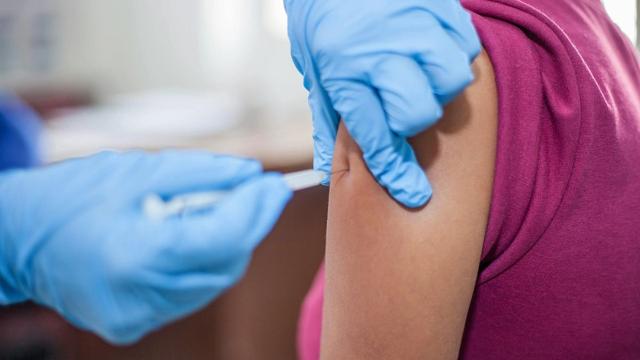
Vaccinations have been recommended as a way of reducing the risk of COVID-19 and preventing the use of sick days.
Statewide, the COVID-19 vaccination coverage is currently 11%.
“There are more Californians who are up to date now than there were six months ago, but fewer than there were one year ago,” said Deines.
CDPH operates a COVID-19 Vaccination Data webpage that includes a chart showing persons with up-to-date COVID-19 vaccination status in California, by county of residence.
The date is updated monthly.
CDPH recommends everyone 6 months and older to have access to and the choice to receive available COVID-19 vaccines.
“Vaccination reduces the risk of serious illness, hospitalization and death,” said Deines.
CDPH also recommends that anyone who hasn’t received a dose of 2025-2026 COVID-19 vaccine, or is due for a second dose, to “get vaccinated now to help protect them against strains of the virus that causes COVID-19” currently in California.
According to CDPH, some groups, including young children and immunocompromised people, may need multiple doses.
“We recommend people aged 65+ receive two doses, six months apart,” said Deines. “Schedule a vaccine appointment by visiting MyTurn.ca.gov or contacting your local pharmacy or healthcare provider.”
COVID-19 vaccines will be covered for most people through their health insurance plans, including Medi-Cal and regular health care providers.
Those having difficulty obtaining vaccines can contact their health care provider or local health department to locate a provider.
“While test positivity rates are rising, we are not seeing a corresponding increase in severe illness or more hospitalizations,” said Deines. “Hospitalization rates remain very low statewide at 0.98 COVID-19 admissions per 100,000 people. This is substantially lower than hospitalization rates at this same time the past two years (2.69 in 2025 and 9.25 in 2024).”
Over the past several years, Deines said California has seen a decoupling of high levels of COVID-19 disease transmission and severe outcomes - hospitalizations and deaths.
“We continue to see this higher activity/lower severity trend during this 2026 summer wave,” said Deines. “As COVID-19 circulates across California, CDPH continues to recommend that all individuals age 6 months and older stay up to date on COVID-19 vaccinations. This is particularly important for higher risk individuals, such as infants and toddlers, pregnant individuals, older persons and others with risks for serious disease.”