As many as 47,000 people could be kicked off CalFresh
Regional News

Audio By Carbonatix
8:45 PM on Wednesday, October 21
Madeline Shannon
(The Center Square) – As federally-imposed work requirements take effect for food benefits recipients, roughly 47,000 people stand to lose access to CalFresh starting this month.
This, as well as other federal limitations on the Supplemental Nutrition Assistance Program, known as CalFresh in California, will save taxpayers $66.2 million, according to California’s 2026-27 budget. The new work requirements were stipulated as part of the federal government’s 2025-26 budget, passed in July 2025. That is commonly known by lawmakers as H.R. 1, or the One Big Beautiful Bill Act.
The other changes for SNAP included making some immigrants ineligible for food benefits and state utility subsidy limitations, among other restrictions.
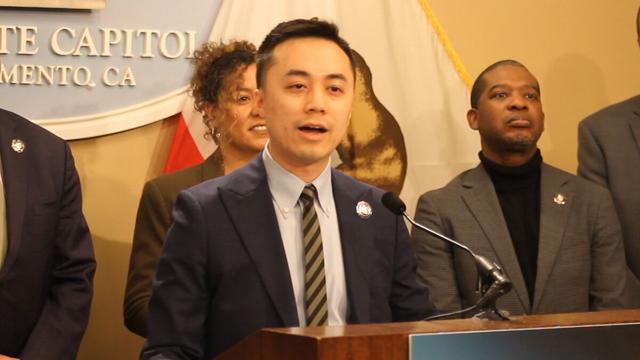
“H.R. 1’s expanded work requirements are red tape traps to cut off vital food aid for low-income people,” Assemblymember Alex Lee, D-Milpitas and a member of the Assembly Select Committee on CalFresh Enrollment and Nutrition, told The Center Square on Wednesday. “While the federal regime is destroying our safety nets, we are stepping up to strengthen California’s investments in food aid.”
In the next year, roughly 562,000 people are set to lose their access to CalFresh because of the new federal work requirements, according to Lee’s office.
The work requirements were anticipated earlier this year as California’s legislators crafted a budget that, in many ways, was a response to federal budget cuts to programs like SNAP. Roughly $211 billion were cut in federal taxpayer funding from that program, according to previous reporting by The Center Square. The new rules mean that able-bodied adults between 18 and 65 who don’t have minor children at home would be required to work, be in school or do community service for at least 20 hours a week, or 80 hours averaged out over the month.
Some lawmakers previously told The Center Square that is a good thing.
“I think we need to do a lot to make sure they transition into adult life,” Assemblymember David Tangipa, R-Fresno, previously told The Center Square. “We should have that social safety net that is able to catch people when they are struggling the most, but these work requirements are not overly burdensome.”
Tangipa did not respond to The Center Square before publication time on Wednesday.
According to the budget passed by the California legislature and signed into law by Gov. Gavin Newsom, funding for CalFresh and other nutrition programs that won’t see cuts will cost taxpayers $3.2 billion, with $1.6 billion coming from the state’s general fund. The fund is essentially the state government’s taxpayer-funded checking account.
After the cuts, approximately 3.4 million California households are expected to still receive CalFresh benefits during the 2026-27 fiscal year.
The federal cuts to CalFresh come during a year in which state lawmakers grappled with a $16.9 billion structural deficit, prompting many politicians to make what they called hard decisions for the budget. The ongoing deficit in the Golden State will still be there next year when lawmakers come back for the 2027 legislative session and continue their work on budget issues, including how much taxpayer funding to allocate to programs such as CalFresh.
“That means that here in California, we have to make those difficult choices,” Assemblymember Mark Gonzalez, D-Los Angeles, told The Center Square on Wednesday. “The Legislative Analyst’s Office warned us that we face those difficult fiscal trade-offs, and that we just cannot simply replace all food assistance lost through H.R. 1 without finding billions of dollars of additional revenue or reducing spending from other programs to sustain this program.”
While reducing eligibility for taxpayer-funded food benefits programs will save money for state and federal taxpayers, the human cost is ultimately not worth the fiscal savings, said Assemblymember LaShae Sharp-Collins, D-San Diego and a member of the Assembly Select Committee on CalFresh Enrollment and Nutrition.
“This is baffling to me that we’re having this conversation about the impact this is going to have on so many families to maintain and put food on the table,” Sharp-Collins told The Center Square on Wednesday. “That’s the one thing we should have access to at all times. Everyone should be able to thrive and not just survive.”
The California Department of Food and Agriculture, the U.S. Department of Agriculture and food banks across the state did not respond to The Center Square on Wednesday or did not make anyone available to speak on the record.