Potentially historic El Niño winter could batter Arizona
Regional News

Audio By Carbonatix
1:35 PM on Wednesday, October 21
(The Center Square) – A potentially historic winter of rain and mountain snow is about to descend upon the American West, potentially leaving a trail of natural disasters in its wake.
That’s because this winter’s El Niño, which is a natural climate pattern where surface waters in the central and eastern Pacific warm above average, is a one-in-a-thousand-year variant, according to experts from the University of Arizona’s Water Resource Center.
That could spell trouble for those living in flood-prone areas of Arizona, especially, as strong El Niño winters have left the state in tatters in the past.
Tom Frieders, the acting meteorologist at the National Weather Service’s Tucson office, told The Center Square that this year’s El Niño most closely mirrors that of the infamous 1983-84 cycle.
That was the year that $6.1 billion in inflation-adjusted flooding damage hit Arizona and the West, including a historic five-day deluge in late September and early October of that year that destroyed more than 15,000 homes and business across the state.
Analysts: Heed the warnings
While analysts like Frieders and University of Arizona Economist Dari Fae Duval cautioned that nothing’s certain in an El Niño year, both advised Arizonans to prepare for whatever Mother Nature has in store for them.
“What we’re trying to stress is there’s no correlation between the strength of the El Niño and the magnitude of the impacts,” Frieders told The Center Square. “So we’re telling people it’s not time to panic about anything, but it is time to prepare.”
Among the things that Arizonans can do to prepare, according to Frieders, is to double-check whether you have flood insurance, especially if you live in an area that’s prone to it, and staying updated on weather forecasts and warnings, should severe storms hit the state this winter.
Duval, who is an extension economist at the University of Arizona’s School of Natural Resources and the Environment, told The Center Square that the upcoming winter will deliver an uneven amount of economic impact on the state, depending on where the worst storms wander.
The longtime Tucson-based economist said she couldn’t pin a dollar amount on the winter’s potential storm damage amount but said Frieders’ comparison to storm-laden 1983 made sense.
Duval cited California Gov. Gavin Newsom’s preemptive state of emergency over natural disaster funding in September as a sign of what might come Arizona’s way, which would impact Arizonans across the board.
“That's something that, if that were to happen, that could have some impacts for infrastructure, for communities, even for homeowners,” Duval said.
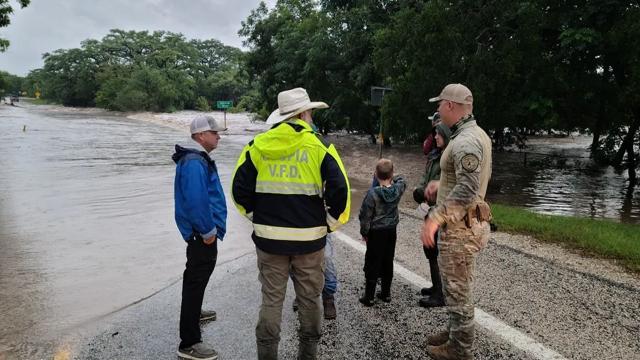
One area to keep an eye on when it comes to flooding is on the state’s legion of burn scars, including the Pocket Fire that torched 27,393 acres near Sedona this summer.
Those areas no longer have the vegetation necessary to hold much when it comes to rainfall, Duval said, which could lead to catastrophic flooding in neighboring areas.
“It'll depend on where someone lives,” Duval said of the winter’s impacts on Arizonans.
“I don't want to try and predict the future, but you know, to the extent that there could be damage to infrastructure, whether that be roads or something that could affect people's day to day life if those events were to occur,” she added.
No guarantees
One thing that everyone The Center Square talked to stressed is that there’s no guarantee that this year’s super-charged El Niño pattern will provide a historic bounty of rain and snowfall.
And Mike Crimmins, a climatologist at the University of Arizona, said this winter’s El Niño will be more of a slow burn than a scene out of a disaster film, though Arizonans should prepare accordingly.
“It’s not doom and gloom. It's a heads up,” Crimmins told The Center Square. “It’s one of these things where it's a slow roll. El Niño is not like one storm with sharks flying out of it or anything like that. It's a shift in conditions that tilts our weather towards wetter than average conditions.”
While two of the state’s three costliest floods came in El Niño patterns, the most expensive one (in October 2010), was during a La Niña cycle, with $5.5 billion in damage from severe thunderstorms that hit the state.
For now, representatives from Arizona’s Department of Insurance and Financial Institutions told The Center Square that residents can do their part to prevent costly repairs this winter.
“With strong El Niño conditions expected to bring wetter-than-average weather and heavy winter storms across Arizona through early 2027, homeowners and renters face heightened risks from flash flooding — especially near washes and wildfire burn scars,” the department’s statement reads. “Repairing flood-damaged properties can result in out-of-pocket costs if homeowners rely on their standard homeowners and renters insurance policy alone.”
Above all, the department advises Arizonans to pick a dedicated flood insurance policy now, rather than waiting for flooding to arrive, with the National Flood Insurance Program typically requiring a 30-day waiting period before coverage begins.
“Last-minute purchases won't protect against an imminent storm,” their statement continued. “We urge Arizonans to review their coverage and get the facts by visiting our website to ensure their homes and finances are fully protected before winter weather peaks.”